Golden Teacher Bar
History & Origin
1980s Discovery: First appeared in North American spore exchanges; quickly became popular for both cultivation ease and reported trip quality.
Name Popularization: Word of mouth among early hobby cultivators; “Golden Teacher” moniker cemented by online forums in the 1990s.
Etymology
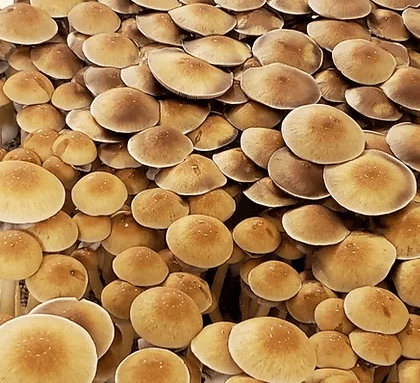
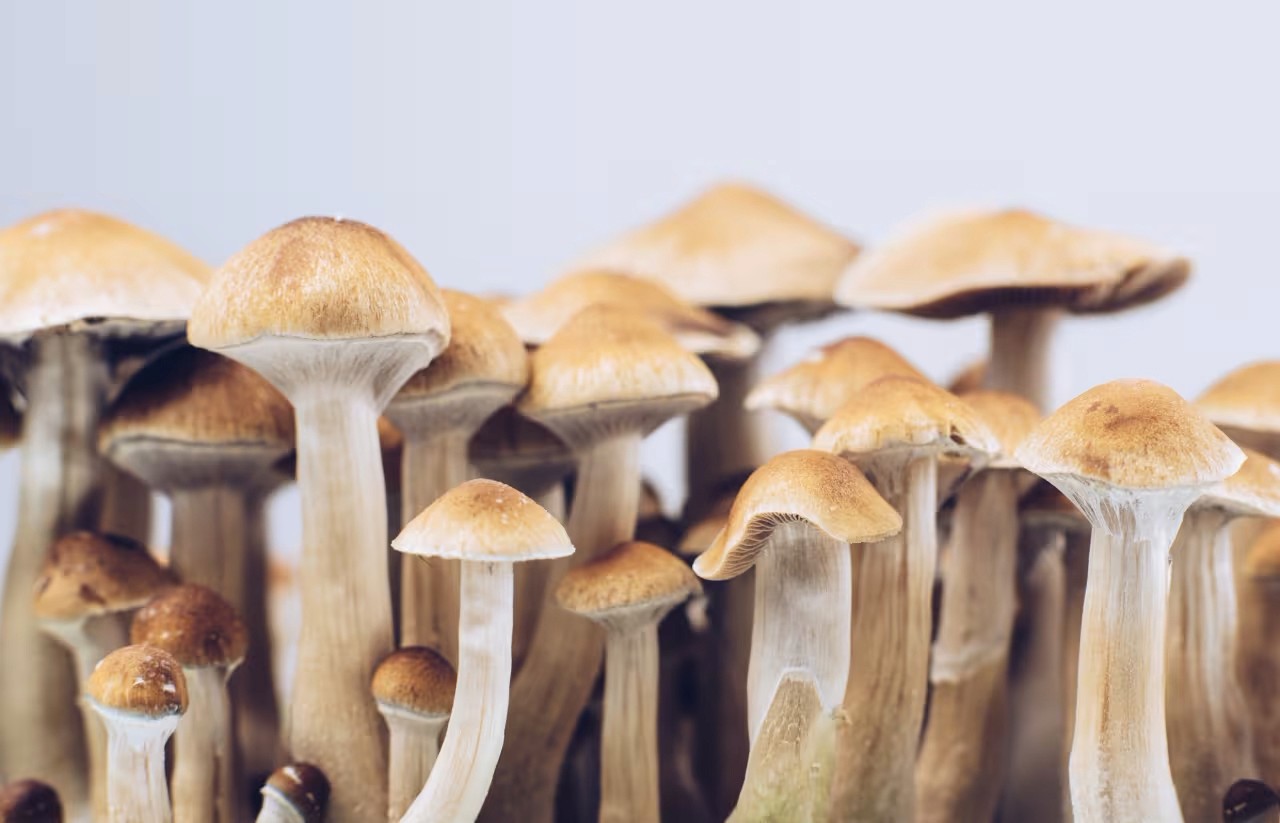
The name “Golden Teacher” derives both from the mushroom’s distinctive warm‐golden cap coloration and the widely reported introspective, “guiding” nature of its psychoactive effects.
Order now
Taxonomy & Naming
Kingdom: Fungi
Division: Basidiomycota
Class: Agaricomycetes
Order: Agaricales
Family: Hymenogastraceae
Genus: Ps*locybe
Species: Ps*locybe c*bensis
Cultivar/Strain: “Golden Teacher”
Distribution & Habitat
Global Cultivation: Widely cultivated indoors worldwide due to robust mycelium and reliable fruiting.
Natural Occurrence: Origin unclear; likely derived from tropical/warm‐temperate populations in Florida, USA, though wild occurrences are rare.
Preferred Substrates:
Manure‐based (horse, cow) substrates.
Brown rice flour and vermiculite cakes (PF Tek).
Coir, straw, or supplemented compost in bulk substrate.
Uses &
Cultural Significance
Recreational: Widely used by psychonauts for personal growth and spiritual exploration.
Therapeutic: Emerging interest in m*crodosing for mood enhancement, creativity, PTSD, and depression; formal clinical research still in early stages.
M*crodosing Protocols: Typical m*crodose 0.1–0.3 g dry; schedules range from every third day to protocols like the Fadiman method.
Synonyms &
Related Strains
Considered a cultivar (strain) of the common species Ps*locybe c*bensis.
Closely related to other c*bensis strains such as B+, Penis Envy, and Ecuador; distinguished by cap color and reported trip quality.
Psychoactive Effects
Onset: 20–60 minutes (oral ingestion).
Duration: 4–6 hours (peak ~2–3 hours).
Qualitative Effects:
Visuals: Moderate visual enhancement, mild geometric patterns.
Emotional: Euphoric, introspective, sense of connection.
Cognitive: Insightful, meditative, often described as “wise” or “teacher‐like.”
“Set & Setting”: Appreciated for offering a balanced experience with lower risk of anxiety relative to high‐potency strains.
Safety & Risk Profile
Toxicity: Very low; no known lethal dose in humans.
Contraindications: Family history of psychotic disorders; uncontrolled hypertension; combining with SSRIs requires caution.
Adverse Reactions: Possible transient anxiety, nausea, headache (“wood‐tremor”).
Harm Reduction:
Accurate dosing with a milligram scale.
Use in safe environment with sitter if high dose.
Avoid driving or operating machinery.
Chemistry
Ps*locybin: 0.6 – 1.2%
Ps*locin: 0.1 -0.5% (degrades quickly)
B*eocystin: ~0.05 – 0.15%
N*rbaeocystin: Trace amounts
Note: Concentrations vary by substrate, flush, and environmental factors.
Macroscopic Features
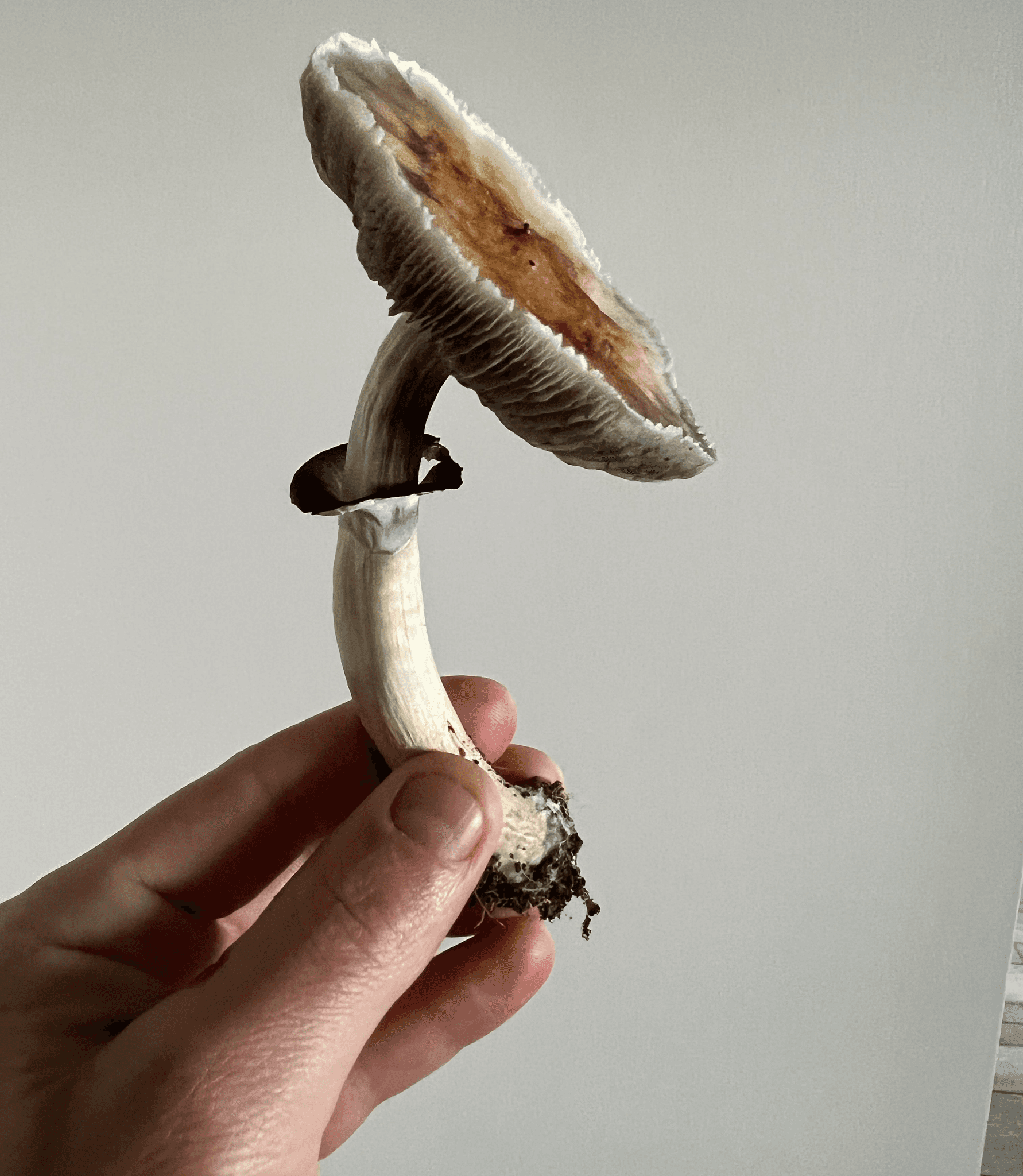
Cap (Pileus):
Size: 5–8 cm diameter (can range 4–9 cm).
Shape: Convex to broadly umbonate; often flattening with age while retaining a slight central bump.
Color: Rich golden‐yellow to ochre when young; may fade to pale tan or light brown at maturity. Commonly exhibits a darker, water‐soluble “bluing” spot when bruised.
Surface: Smooth and viscid when moist; sometimes faint radial striations near the margin.
Gills (Lamellae):
Attachment: Adnate to slightly sinuate.
Color: Pale gray‐brown when young, darkening to deep purple‐brown as spores mature.
Stipe (Stem):
Length: 6–12 cm.
Thickness: 0.8–2 cm, often thicker at the base.
Color: Whitish to pale yellow; bruises blue when handled.
Annulus: A thin, membranous ring (“veil remnant”) often present but may disappear with handling.
Flesh:
Firm and fibrous, whitish; bruising blue at points of injury.
Microscopic Features
Spores:
Shape: Ellipsoid to slightly subrhomboid in profile.
Size: Approximately 11–17 µm × 8–10 µm.
Color: Dark purple‐brown spore print.
Basidia:
Typically four‐spored.
Cystidia:
Pleurocystidia and cheilocystidia present; fusoid‐lageniform with occasional capitate tips.