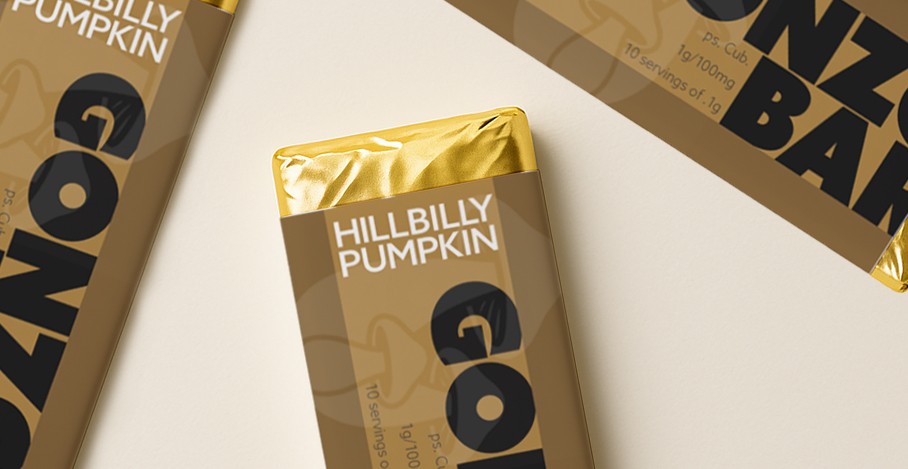
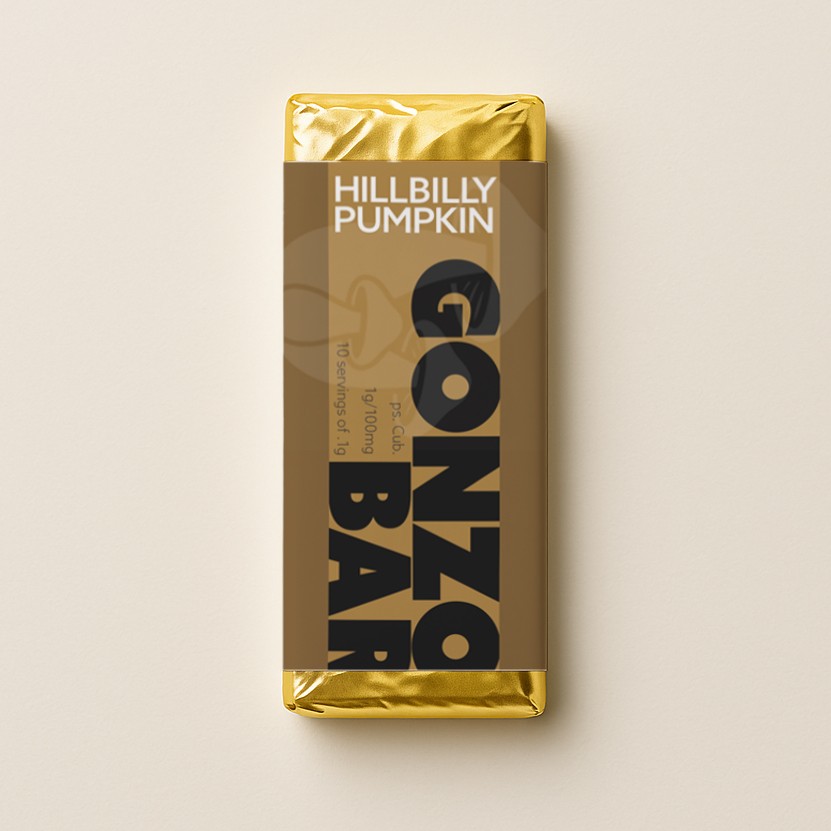
The Hillbilly Pumpkin Bar
History & Origin
Discovery: First shared in online forums and underground spore exchanges in the early 2000s, the Hillbilly Pumpkin variety is believed to be an isolated strain of Psilocybe cubensis, selectively cultivated for its visual appeal and high yield.
Name Popularization: Gained a cult following through message boards like Shroomery and Reddit's r/mycology due to its seasonal, autumn-themed branding and reliability in home grows.
Etymology
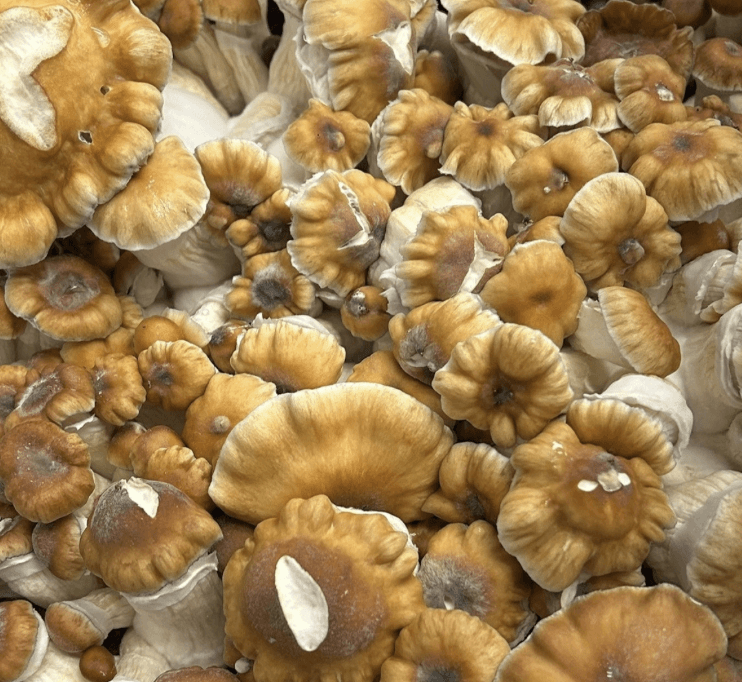
The name "Hillbilly Pumpkin" is a colloquial moniker referencing the mushroom's distinctive orange-capped appearance reminiscent of a pumpkin, combined with its rural American origin and reputation for being resilient and easy to grow. It is not an official taxonomic designation but widely recognized among cultivators and psychonaut communities.
Order now
Taxonomy & Naming
Kingdom: Fungi
Division: Basidiomycota
Class: Agaricomycetes
Order: Agaricales
Family: Hymenogastraceae
Genus: Psiloc*be
Species: P. cub*nsis
Variety/Cultivar: Hillbilly Pumpkin (informal)
Distribution & Habitat
Global Cultivation: Widely grown in indoor settings by home cultivators due to its adaptability and resistance to contamination.
Natural Occurrence: No known wild specimens; a fully domesticated cultivar.
Preferred Substrates:
Cow or horse manure (bulk substrate)
Brown rice flour (PF Tek)
Coir/vermiculite blends
Uses &
Cultural Significance
Recreational: Known for a colorful, upbeat experience, it is favored for social or artistic settings.
Therapeutic: Anecdotal use for mood elevation, reducing social anxiety, and creative inspiration. Formal studies on the strain specifically are lacking.
Microdosing Protocols: Same as other cubensis: 0.1–0.3g every 3rd day or in cyclical regimens.
Synonyms &
Related Strains
Closely related to strains like Golden Teacher, B+, and Rusty White.
Typically grouped with Psiloc
8be cubensis varieties due to lack of genetic distinction beyond phenotype.
Psychoactive Effects
Hillbilly Pumpkin is known for a moderate to high psiloc*bin content, depending on growing conditions. Anecdotal reports describe its effects as:
Onset: 30–60 minutes after ingestion (oral)
Duration: 4–6 hours (peak ~2–3 hours)
A strong, euphoric onset
Visual distortions (color saturation, tracers)
Emotional release and introspective depth
Bodily relaxation with minimal nausea (compared to some strains)
Visuals: Vibrant enhancement of warm colors, swirling patterns
Emotional: Euphoric and energizing; reported to be less introspective than Golden Teacher
Cognitive: Playful, spontaneous, sometimes silly or talkative
Trip Type: Often described as “social” or “creative”
Some users associate this cultivar with a more "grounded" or "earthy" trip, which may be attributed more to expectation-setting than chemical uniqueness.
Safety & Risk Profile
Toxicity: Very low. No known lethal dose.
Contraindications:
Personal or family history of schizophrenia or bipolar disorder
Mixing with antidepressants (SSRIs, MAOIs)
Adverse Reactions:
Rare: nausea, anxiety, confusion, especially in unfamiliar environments
Harm Reduction:
Use in a safe space with a trusted sitter
Dose conservatively
Avoid operating machinery or driving
Chemistry
Psiloc*bin: ~0.6–1.1%
Psiloc*n: ~0.1–0.5% (less stable)
Baeoc*stin: Trace amounts (~0.01–0.15%)
Norbaeoc*stin: Rarely detected
Note: Values vary based on substrate and drying method.
Macroscopic Features
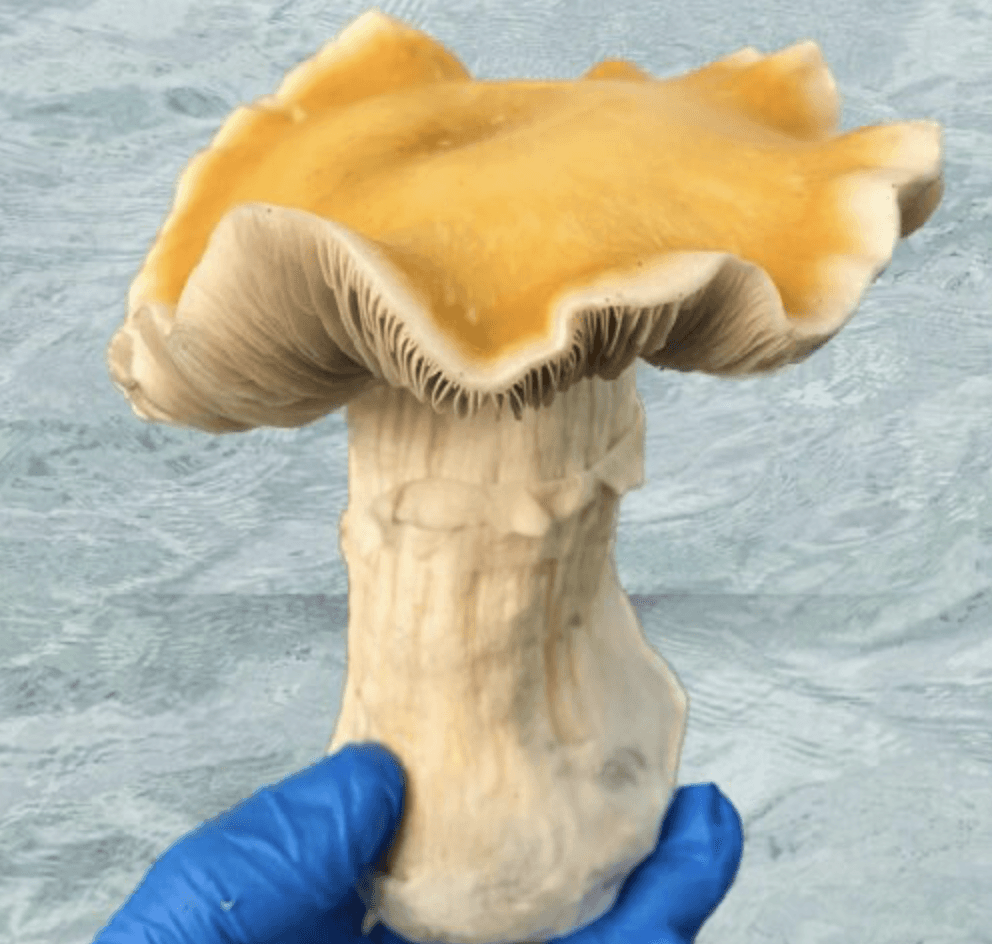
Cap (Pileus):
Size: 4–7 cm
Shape: Hemispheric to convex, flattens with age
Color: Rich orange to ochre, sometimes with radial striations when moist
Surface: Glossy or slightly wrinkled
Bruising: Blue where damaged
Gills (Lamellae):
Attachment: Adnate to sinuate
Color: Light gray to deep purple-black with age
Stipe (Stem):
Length: 8–14 cm
Thickness: 0.8–1.5 cm, often thickening at base
Color: White, bruises blue
Annulus: Often present but may vanish with age
Microscopic Features
Spores:
Shape: Elliptical, subrhomboid
Size: ~12–14 x 8–10 µm
Color: Purple-brown
Basidia: Four-spored
Cystidia:
Present; fusoid-lageniform and pleurocystidia visible with staining
Request more info.
We strive to follow all laws and regulations, bringing people
a safer, more accurate way to access these elements.
All elements are for research purposes only and we
are not responsible for any misuse or illegal use.
By using this site and/or services, you are agreeing to our
Terms of Service, Privacy policy and Refund policy.
Copyright GonzoBarCo LLC 2025