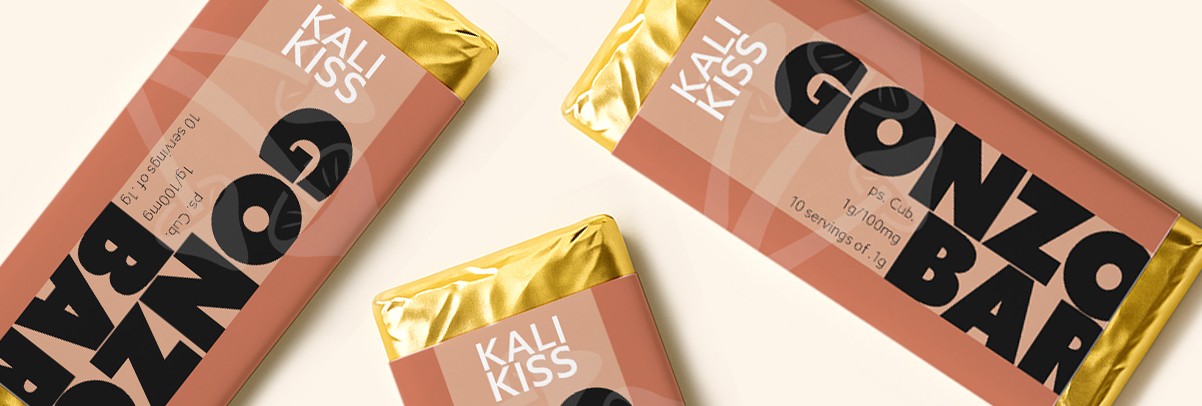
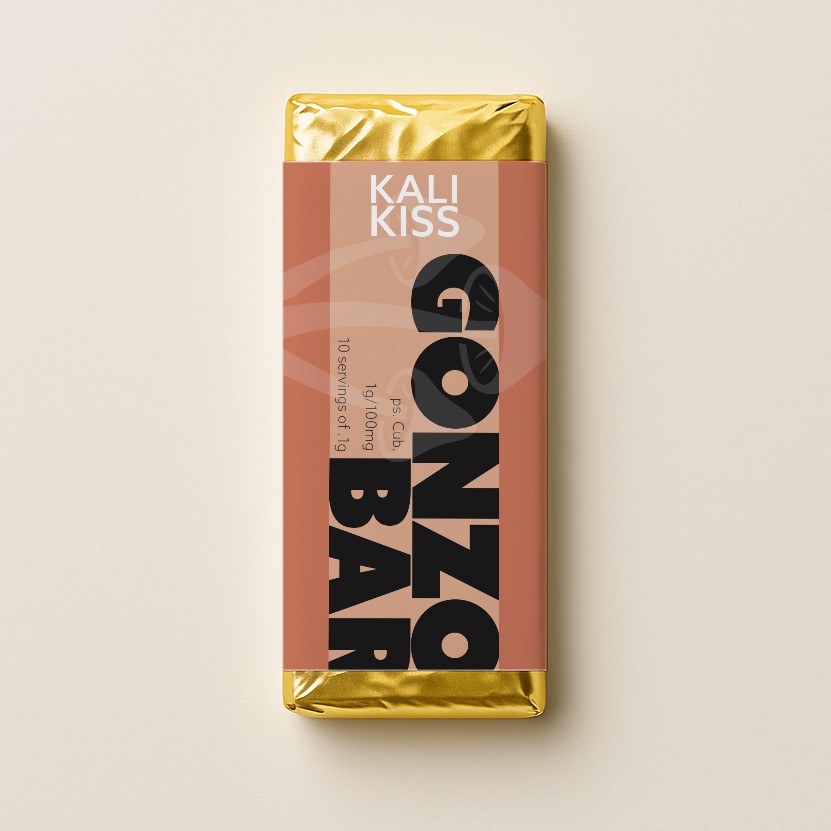
Kali's Kiss Bar
History & Origin
Discovery: Circulated among mycology forums in early 2000s; named by its first cultivator, known only as “Kali.”
Popularity: Gained favor for reliable colonization, moderate yields, and a “gentle” trip, earning a niche following in both hobbyist and therapeutic m*crodosing circles.
Order now
Etymology
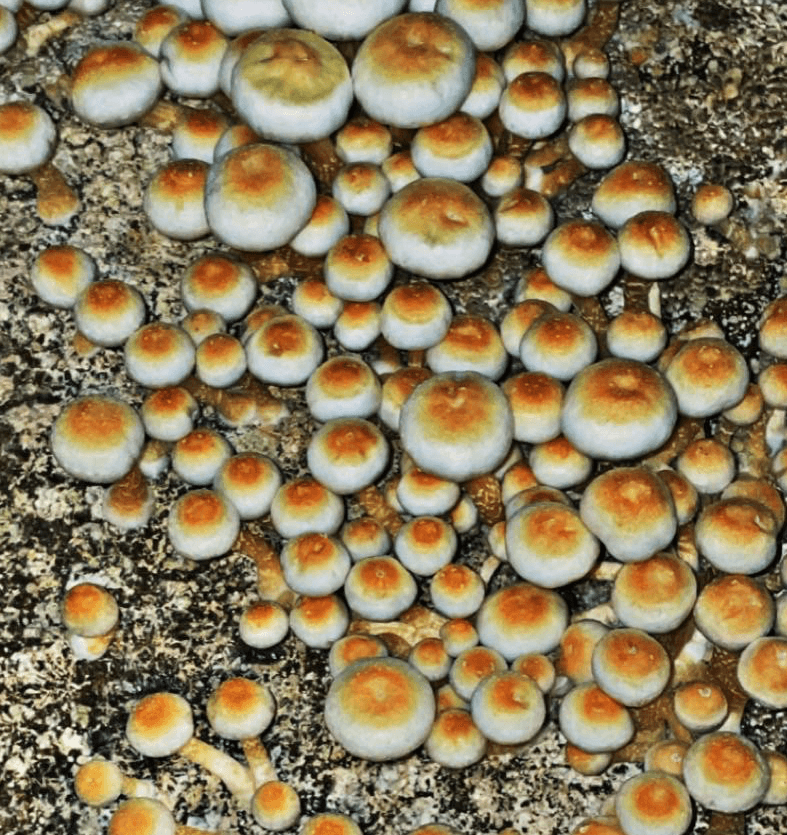
Named for its breeder (“Kali”) and revered within home‐cultivation circles, the moniker “Kalis’ Kiss” evokes its reputation for a smooth, gentle “touch” on the psyche and its origins as a lovingly shared family strain.
Taxonomy & Naming
Kingdom: Fungi
Division: Basidiomycota
Class: Agaricomycetes
Order: Agaricales
Family: Hymenogastraceae
Genus: Ps*locybe
Species: Ps*locybe c*bensis
Cultivar/Strain: “Kalis’ Kiss”
Note: Like other P. c*bensis cultivars, it shares species‐level taxonomy with Golden Teacher, B+, and Penis Envy, but is distinct in cap shape and trip profile.
Distribution & Habitat
Natural Occurrence: No documented wild populations; known exclusively from cultivated lines.
Cultivation Origins: First propagated by a home grower (“Kali”) circa early 2000s in North America.
Substrate Preference:
Dung‐based mixes (horse or cow manure)
PF Tek (brown rice flour & vermiculite)
Coir/gypsum bulk substrates
Uses &
Cultural Significance
Recreational: Popular among enthusiasts seeking a balanced, low‐anxiety journey.
Therapeutic & M*crodosing:
M*crodose range: 0.05–0.20 g dry every 2–3 days.
Anecdotal use for mood enhancement, creativity boost, and mild anxiety relief.
Synonyms &
Related Strains
Considered a cultivar (strain) of the common species Ps*locybe c*bensis.
Closely related to other c*bensis strains such as B+, Penis Envy, and Ecuador; distinguished by cap color and reported trip quality.
Psychoactive Effects
Onset: 20–40 minutes (oral).
Duration: 4–6 hours (peak 2–3 hours).
Profile:
Visuals: Mild–moderate geometric tracers and color enhancement.
Emotional: Warm, euphoric, compassionate; low anxiety risk.
Cognitive: Clear‐headed introspection, gentle insights; often described as “friendly” or “hugging.”
Safety & Risk Profile
Toxicity: Extremely low; no recorded fatalities.
Adverse Effects: Rare headache, mild nausea, transient anxiety at high doses.
Contraindications:
History of psychosis or bipolar disorder
Concurrent MAOI use without guidance
Harm Reduction:
Weigh doses precisely (0.001 g scale).
Use in a safe, supportive setting.
Have a sober sitter for high‐dose sessions.
Chemistry
Ps*locybin: 0.7– 1.3%
Ps*locin: 0.1 -0.4%
B*eocystin: ~0.08%
N*rb*eocystin: Trace amounts
Note: Concentrations vary by substrate, flush, and environmental factors.
Macroscopic Features
Cap (Pileus):
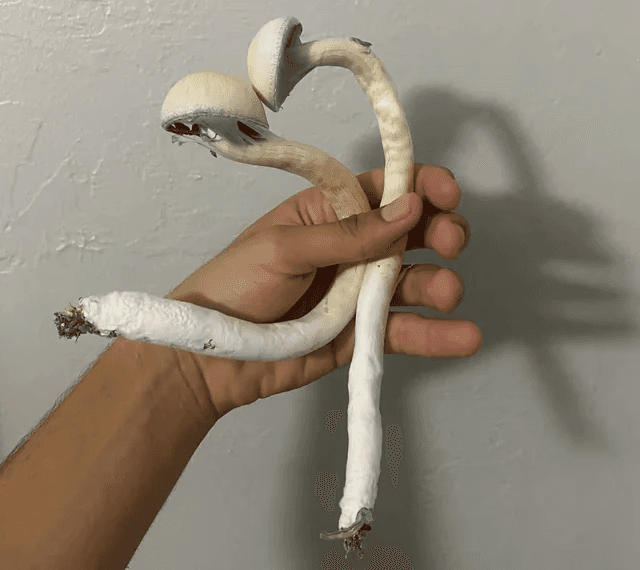
Size: 4–7 cm diameter.
Shape: Conical to broadly convex, often retaining a gentle umbo.
Color: Light caramel to honey tan; fades to pale cream at the margin; bruises blue at contact points.
Surface: Smooth and slightly moist; fine radial striations visible when expanded.
Gills (Lamellae):
Attachment: Adnate to slightly sinuate.
Color: Pale gray changing to deep purple‐brown as spores mature.
Stipe (Stem):
Length: 7–14 cm.
Thickness: 0.6–1.2 cm, relatively slender and even.
Color: Whitish to pale yellow; readily bruises blue.
Annulus: Thin, persistent ring zone from a partial veil.
Flesh:
White, fibrous; immediately bruises blue when cut or handled.
Microscopic Features
Spores: Ellipsoid, smooth, 11–15 µm × 7–9 µm; spore print dark purple‐brown.
Basidia: Four‐spored, 20–25 µm long.
Cystidia: Present on gill edges and faces; lageniform to fusoid with narrow necks.
Request more info.
We strive to follow all laws and regulations, bringing people
a safer, more accurate way to access these elements.
All elements are for research purposes only and we
are not responsible for any misuse or illegal use.
By using this site and/or services, you are agreeing to our
Terms of Service, Privacy policy and Refund policy.
Copyright GonzoBarCo LLC 2025